
Your Home Should Work for You at Every Age.
Published by Reliable Renovations | February 2026
Most homeowners we talk to aren't planning to move. They like their neighborhood, their neighbors, and the home they've spent years making their own. What they're starting to think about is whether that home will still work for them in 10 or 20 years.
That's the conversation aging-in-place remodeling starts with. Not limitation. Not decline. Just smart planning.
According to AARP, 90 percent of people age 65 and over would prefer to stay in their own homes as they get older. The gap between wanting to stay and being able to stay comes down to how well the home is designed for the long term. That gap is exactly what a well-planned remodel closes.
This Is Not a Niche Request Anymore
73% of remodelers reported that requests for aging-in-place features have significantly or somewhat increased over the past five years. And the Houzz 2026 Kitchen Trends Study found that 31% of homeowners renovating their kitchens are doing so with aging relatives in mind, while 41% are planning for their own aging needs.
That means the majority of homeowners thinking about a kitchen remodel right now have longevity somewhere in the back of their mind. The smart ones are putting it at the front.
Start with the Bathroom
The bathroom is where aging-in-place design matters most and delivers the most immediate return. Falls in the bathroom are one of the leading causes of injury in older adults, and most of them are preventable with the right modifications.
Here is what a properly executed aging-in-place bathroom remodel includes:
Walk-In shower. Minimizing the threshold removes the challenge of stepping over the side of a tub in the bathroom. Done well, it also makes the space feel larger and more open. We design these with proper slope and drainage so water stays where it belongs.
Built-in shower bench. A fixed bench is both a safety feature and a comfort feature. It eliminates the need to stand for the full duration of a shower, which matters far more as we age.
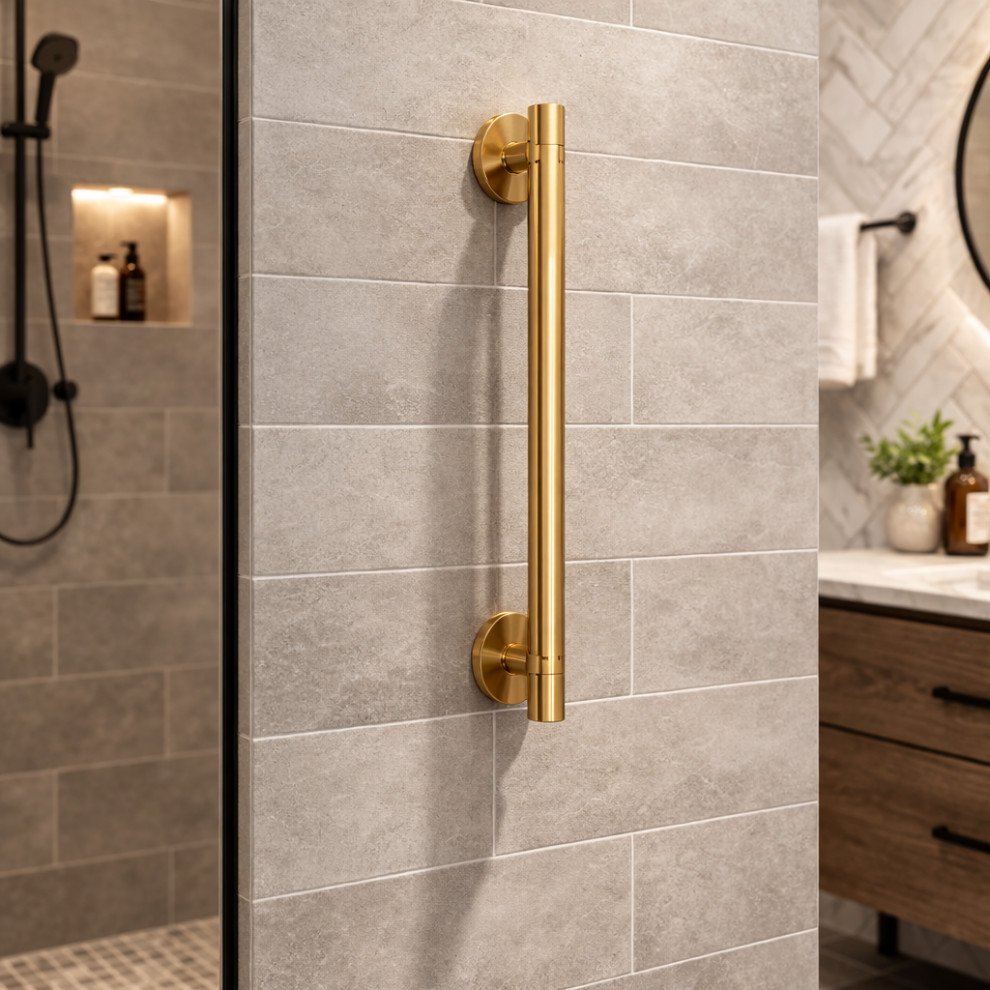
Grab bars. This is where perception and reality often part ways. Most people picture institutional-looking chrome bars bolted to a tile wall. That is not what we install. Kohler offers grab bars in contemporary, traditional, and transitional styles, in finishes including brushed nickel, matte black, and oil-rubbed bronze. They mount securely, meet ADA standards, and look like they belong in the room. The difference between a grab bar that looks like a safety feature and one that looks like a design choice is entirely in the product selection and placement.
Comfort-height toilet. Standard toilets sit around 15 inches from the floor. Comfort-height models sit between 17 and 19 inches, which significantly reduces strain on knees and hips when sitting and standing. We can install everything from basic comfort-height models to full bidet-integrated options with hands-free operation.
Lever-style faucets and hardware. Round knobs require grip strength that diminishes with age and arthritis. Lever handles do not. It's a small change with a long payoff.
Flooring. Matte-finish tile and textured stone both provide a bit of anti-slip grip without looking utilitarian. We can match these to the broader aesthetic of the room without defaulting to anything that reads too medical.
The Kitchen Follows the Same Logic
90% of homeowners planning kitchen renovations are prioritizing accessibility features, including additional lighting, wider drawer pulls, rounded countertops, and non-slip flooring.
Pull-out shelving in lower cabinets, drawer-style dishwashers raised off the floor, wall ovens set at counter height, and a side-by-side refrigerator rather than a top-freezer model are all changes that make a kitchen dramatically easier to use as mobility and reach change over time. None of them look like accessibility features. They just look like a well-designed kitchen.
Counter heights can be varied as well. A section of island or peninsula at a lower height accommodates seated prep work and also serves guests who prefer to sit while cooking alongside someone else.
Plan It Now, Benefit From It Immediately
Here is the thing most homeowners miss: aging-in-place features improve the kitchen and bathroom for everyone in the household right now, not just in 20 years. A curbless shower is easier to clean. A comfort-height toilet is more comfortable for most adults. Better lighting makes cooking easier at any age. Wider doorways make moving furniture easier every time you rearrange a room.
The investment for basic aging-in-place modifications typically ranges from $3,000 to $15,000, though comprehensive whole-home renovations can cost significantly more. The return on that investment comes in two forms: reduced risk and increased resale value. Buyers with aging parents, buyers planning for their own future, and buyers who simply want a home that functions at a higher level are all drawn to these features.
What We Do Differently
We have access to a full aging-in-place product line, including grab bars, comfort-height fixtures, and more. We spec these products in finishes that integrate with the overall design of the room rather than standing apart from it.
The result is a bathroom or kitchen that functions better, looks intentional, and positions your home well for the years ahead.